SMS24.me guide
What Is an SMS Sender ID? Names, Numbers, and Short Codes
Learn why text messages can display a brand name, short code, or phone number, and what an SMS Sender ID can and cannot verify.
By SMS24 Editorial Team | Published August 29, 2026
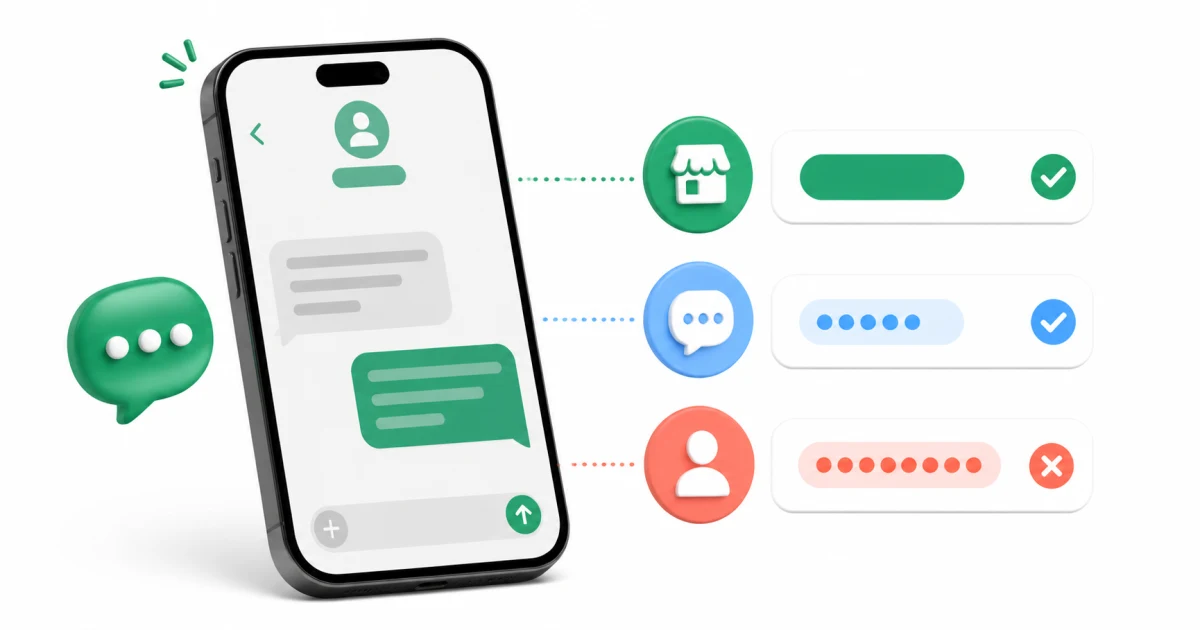
An SMS Sender ID is the name or number shown as the sender of a text message. Depending on the country, carrier, and messaging route, it may appear as a regular phone number, a short numeric code, or a branded name made from letters and numbers.
The sender label helps a recipient understand where a message came from, but it is not proof that the content is trustworthy. Sender formats and registration rules vary by market, and unexpected texts should still be checked through an official app or website.
What is an SMS Sender ID?
A Sender ID identifies the origin of an SMS message on the recipient device. It is the value displayed above or beside the message conversation. Messaging providers and mobile carriers use this identifier when routing application-to-person messages such as login codes, delivery updates, appointment reminders, fraud alerts, and customer notifications.
There are three common forms:
- Alphanumeric Sender ID: a recognizable name containing letters and sometimes numbers, often used for branded one-way notifications.
- Short code: a shortened numeric sender used for registered messaging programs in supported countries.
- Long code or regular number: a standard-length phone number that may support SMS replies and, depending on the route, voice calls.
The visible label does not necessarily reveal every provider or network involved in delivery. It identifies the sender route presented to the recipient, not the complete technical path of the message.
Why does a text show a name instead of a phone number?
If a message shows a company-style name instead of a number, it may have been sent with an alphanumeric Sender ID. This format lets an organization display a recognizable identifier rather than an ordinary telephone number. It is commonly used for account alerts, travel updates, delivery notices, authentication messages, and other automated notifications.
Alphanumeric Sender IDs are generally designed for outbound messaging. In many implementations, recipients cannot reply directly to the displayed name. Availability also depends on the destination: some countries support the format dynamically, some require registration, and others do not support it.
Twilio documents alphanumeric Sender IDs as branded one-way senders and notes that support and registration requirements differ by destination. Its alphanumeric Sender ID documentation also explains that the format is not available everywhere.
What can an alphanumeric Sender ID contain?
Exact formatting rules depend on the carrier and messaging provider. A typical implementation permits a short combination of letters, digits, and limited punctuation, with at least one letter. Twilio, for example, documents a maximum of 11 characters for its supported alphanumeric Sender IDs.
A carrier may shorten, replace, or reject a sender label that does not meet local rules. A requested brand name can also require advance registration and business documentation. For this reason, the sender displayed in one country may differ from the sender used for the same service in another country.
SMS Sender ID vs. SMS short code
An alphanumeric Sender ID and a short code can both represent an automated messaging program, but they are not the same sender type.
- Alphanumeric Sender ID: displays a name-like label, is often one-way, and depends heavily on country support.
- Short code: displays a short numeric address and may support replies or campaign keywords where the program and carriers allow them.
- Regular phone number: displays a conventional number and may support two-way messaging under the applicable route rules.
Read our guide to SMS short codes and 5- or 6-digit senders for a closer comparison with standard phone numbers.
Can you reply to an SMS Sender ID?
You can reply only when the sender route supports inbound messages. A regular mobile or business number may support a response. A short-code campaign may accept defined keywords. An alphanumeric Sender ID is commonly one-way, so the messaging app may hide the reply field or a response may fail.
Do not assume that replying with STOP works for every named sender. A legitimate one-way notification program should provide another clear opt-out or support method when required, such as an account preference page, support number, or separate reply-capable number.
If a phone labels a message as sent or delivered, that status describes message handling rather than sender authenticity. The guide to SMS sent, delivered, and read statuses explains what those labels can and cannot confirm.
Does a branded Sender ID prove a message is legitimate?
No. A familiar sender name is useful context, but it should not replace independent verification. Sender registration and anti-spoofing protections vary across countries, carriers, and routes. A malicious message may also imitate the language or visual identity of a real organization even when the sender label is different.
Be cautious when an unexpected message:
- asks for a password, one-time code, payment detail, or identity document;
- creates urgency with a threat, refund, prize, or account suspension;
- contains an unfamiliar or shortened link;
- asks you to move the conversation to another app or number;
- arrives for an action or account you did not initiate.
Open the known official app or type the official website address yourself. Do not use a surprising message link to sign in. Our smishing guide covers practical checks for suspicious text messages.
Why can the same organization use different Sender IDs?
A global service may use different sender types because no single route works identically in every country. One destination may receive a branded name, another a local long number, and another a registered short code. Carrier filtering, required registrations, message category, reply support, and failover routing can all affect the displayed sender.
The sender may also change when a user is roaming or when the primary route is unavailable. A different Sender ID does not automatically mean the message is fraudulent, but the content and context should still match an action you recognize.
Sender IDs and verification codes
Verification messages may come from a branded name, short code, or regular number. The sender format does not change the basic security rule: a one-time password belongs only in the official verification screen that requested it.
Never read a code to a caller or send it to someone in chat. If an unexpected verification code arrives, do not interact with the message. Review the relevant account through an official channel and change credentials if other warning signs are present.
For the underlying concept, see what an SMS OTP is and how it works.
Can public SMS numbers receive messages from named senders?
Sometimes, but delivery is not guaranteed. The sender, provider, or carrier may reject public, shared, virtual, or previously used number ranges. Country support for an alphanumeric Sender ID also does not guarantee support for every destination number type.
Public inboxes are visible to other visitors. They should never be used for banking, password recovery, private profiles, personal two-factor authentication, payments, or confidential messages. For transparent low-risk testing only, available routes appear on the temporary phone numbers page.
SMS Sender ID FAQ
Is a Sender ID the same as a phone number?
Not always. A Sender ID can be a regular number, short code, or alphanumeric name. The displayed format depends on the messaging route and destination country.
Why is there no reply button on a branded SMS?
The message was probably sent through a one-way route, such as an alphanumeric Sender ID. Use the official support or preference method published by the organization.
Can two messages from the same company show different senders?
Yes. Services may use different sender types by country, carrier, message category, or route availability. Verify unusual messages independently even when the company name looks familiar.
Can a Sender ID be spoofed?
Protections differ by market and carrier, so a visible name alone should not be treated as identity proof. Confirm sensitive requests in the official app or website.
Why did a company name change to a number?
The destination may not support the named sender, registration may be required, or the provider may have selected a compatible fallback route.
Key takeaway
An SMS Sender ID is the name or number shown as the source of a text. It may be a branded alphanumeric label, a short code, or a regular phone number. The format helps identify the messaging route, but it does not prove that a message is safe. Check unexpected requests through an official channel and keep verification codes private.