SMS24.me guide
What Is an SMS OTP? How One-Time Password Verification Works
Learn what an SMS OTP is, how one-time password verification works, and when a public SMS inbox is appropriate for low-risk testing.
By SMS24 Editorial Team | Published August 5, 2026
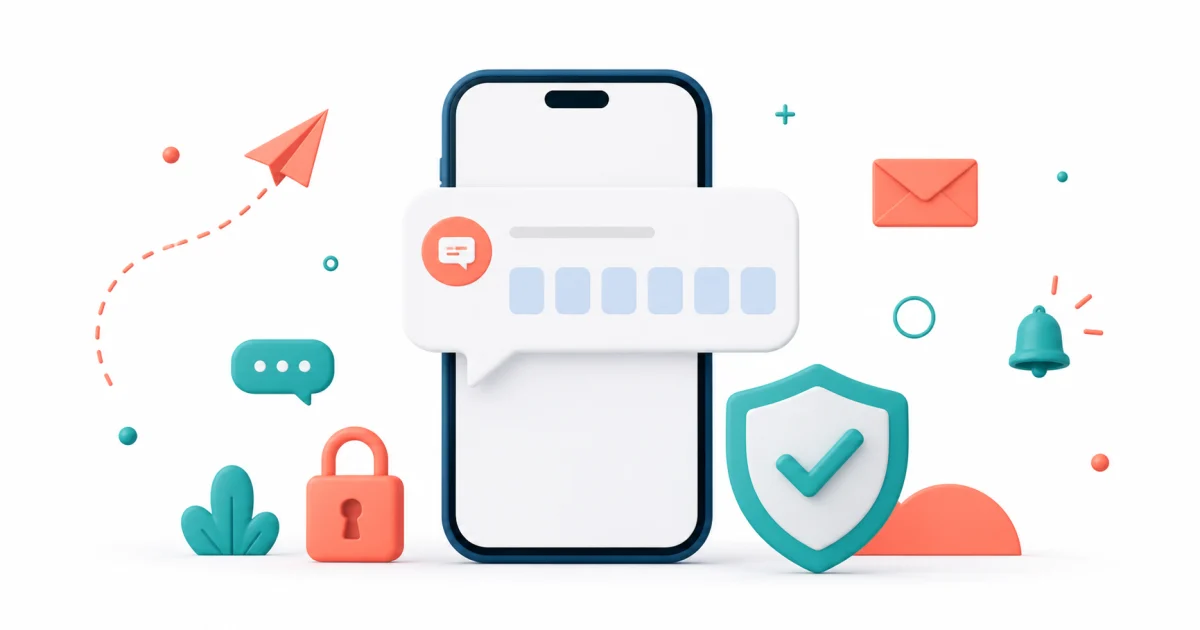
An SMS OTP is a one-time password sent in a text message to confirm a specific action. It is commonly used to verify a phone number during sign-up, confirm a low-risk account change, or test that an SMS delivery flow works.
The important part is “one-time”: the code should work for one request and then expire. An SMS OTP is a security step, but it is not the same as a private phone number or a complete account-security strategy.
What does SMS OTP mean?
OTP stands for one-time password. An SMS OTP is that short-lived password delivered by SMS. A website creates the code, sends it to the number supplied by the user, then asks the user to enter the same code back into the website.
For a legitimate test, the sequence is simple:
- A user starts a sign-up or verification flow.
- The service creates a code that is valid for a limited time.
- The SMS provider delivers the code to the selected number.
- The user enters the current code on the same verification screen.
- The service accepts or rejects the attempt and expires the code.
Because codes expire quickly, requesting several codes in rapid succession can invalidate an earlier one or trigger a rate limit. If a message is delayed, wait briefly and check the newest code before requesting another.
SMS OTP vs. an SMS verification code
In everyday use, these terms usually describe the same thing. “SMS verification code” explains the job of the message, while “SMS OTP” emphasizes that the code should be used once and then expire.
Some services use OTPs for more than phone-number checks. They may use them to confirm a device, approve a sign-in, or recover access. The context matters: a public inbox can be appropriate for a low-risk QA test, but it is not appropriate for a password reset, financial account, two-factor authentication, or any personal account.
When a public SMS inbox is appropriate
Public inboxes are useful for transparent, low-risk testing. For example, a developer can check whether a product sends an SMS to a supported country, or a visitor can observe how a non-sensitive test message is displayed. You can browse available temporary phone numbers or choose a route from the country directory when the sender accepts that number type.
Messages in a public inbox can be visible to other visitors. Never send private information, password-reset links, banking codes, identity checks, or 2FA codes to one. Do not use public numbers to evade a service’s rules or gain access to an account that is not yours.
Why an SMS OTP may not arrive
A missing code is often caused by a number-format error, a temporary delivery delay, a rate limit, or a sender that does not support public or virtual number ranges. The inbox itself cannot make a sender deliver a message that was never sent.
For a methodical check, read SMS Verification Code Not Received? 8 Things to Check First. Start with the country code and number format, wait for the expected delivery window, and avoid repeated resend requests.
How SMS OTPs fit into account security
SMS can provide an extra confirmation step, but a phone number can be lost, reassigned, or targeted through social engineering. For an important account, use the provider’s official recovery options and stronger protections where available, such as an authenticator app, passkey, or hardware security key.
A temporary number has a different purpose: it can help with a legitimate, non-sensitive test where public visibility is acceptable. For the basics, see What Is a Temporary Phone Number?.
FAQ
What is an SMS OTP?
It is a one-time password delivered by text message. The service expects it to be entered during the same verification attempt before it expires.
Is an SMS OTP safe?
It can be one useful security layer, but it should not be treated as the only protection for a sensitive account. Never expose a code in a public inbox or share it with another person.
Can I use a public number for an SMS OTP?
Only for a legitimate low-risk test, and only when the sender allows that number type. Public inboxes are not private and are unsuitable for banking, account recovery, passwords, or two-factor authentication.
Why does an SMS OTP expire?
Expiry limits the time in which a stolen or delayed code could be used. Use the latest code generated by the current verification attempt.